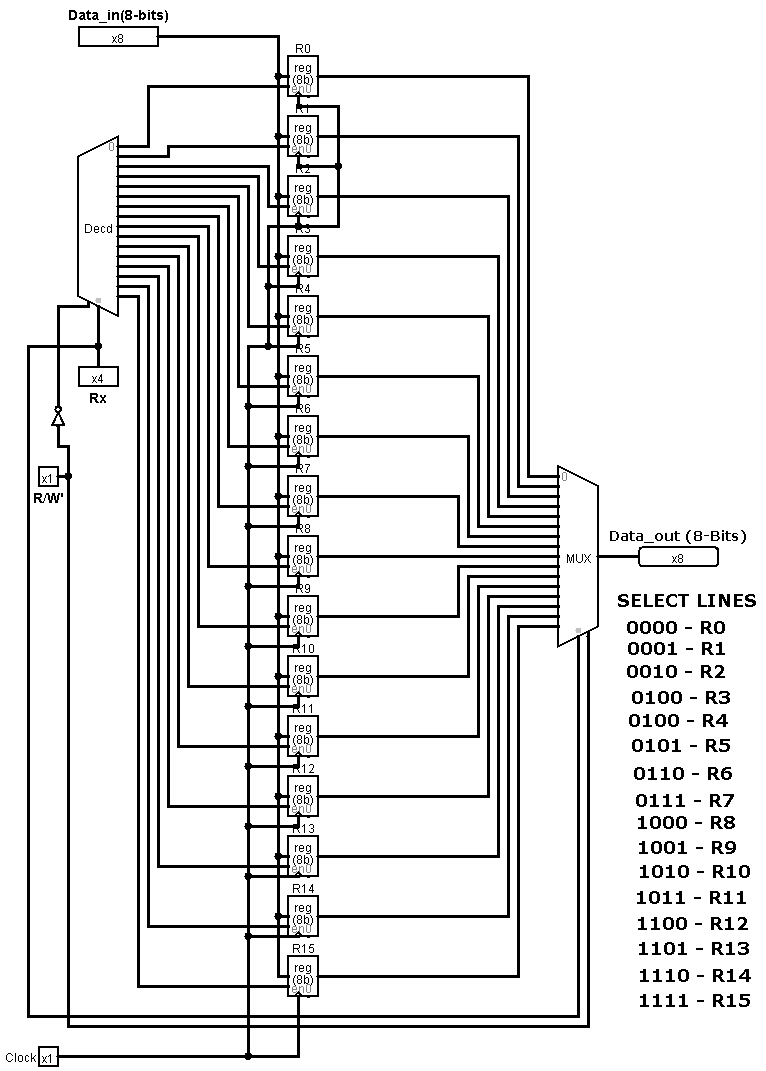
Register File
DESCRIPTION:
Design a register file to store processor states and special function registers for specific control operations
Register File:
A register file is a component within a Central Processing Unit (CPU) that stores temporary values, known as registers, used during the execution of instructions. These registers are small, fast, and volatile memory locations that facilitate efficient data processing.
Key characteristics of register files are:
Small size: Register files typically contain a limited number of registers (e.g., 32 or 64).
Fast access: Registers are accessed quickly, often in a single clock cycle.
Volatile: Register contents are lost when power is turned off.
Reference Images: